A lovely day on magical Inis Oirr
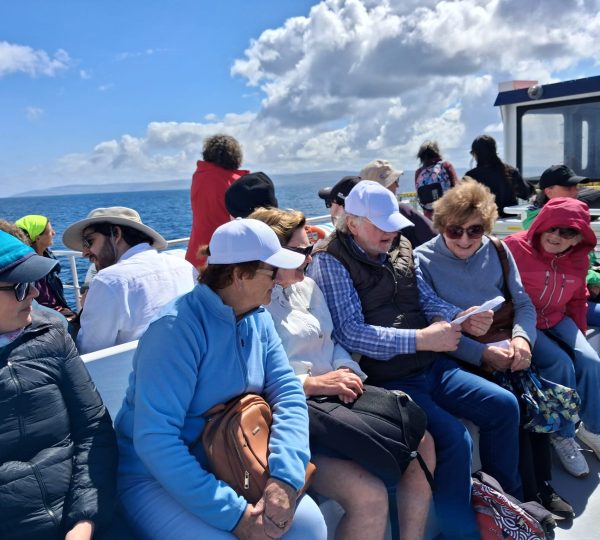
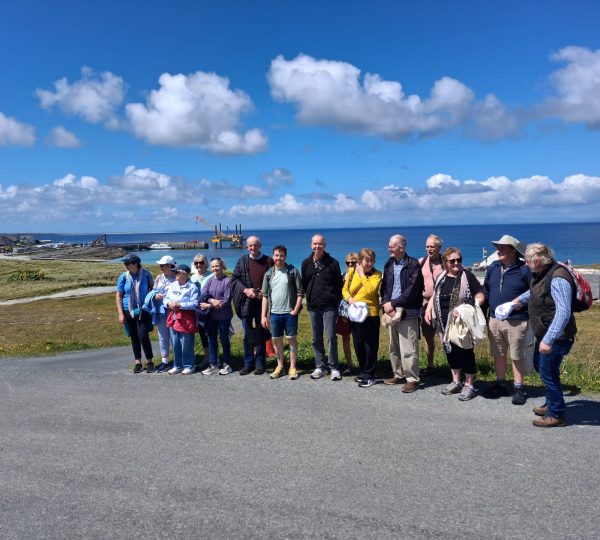
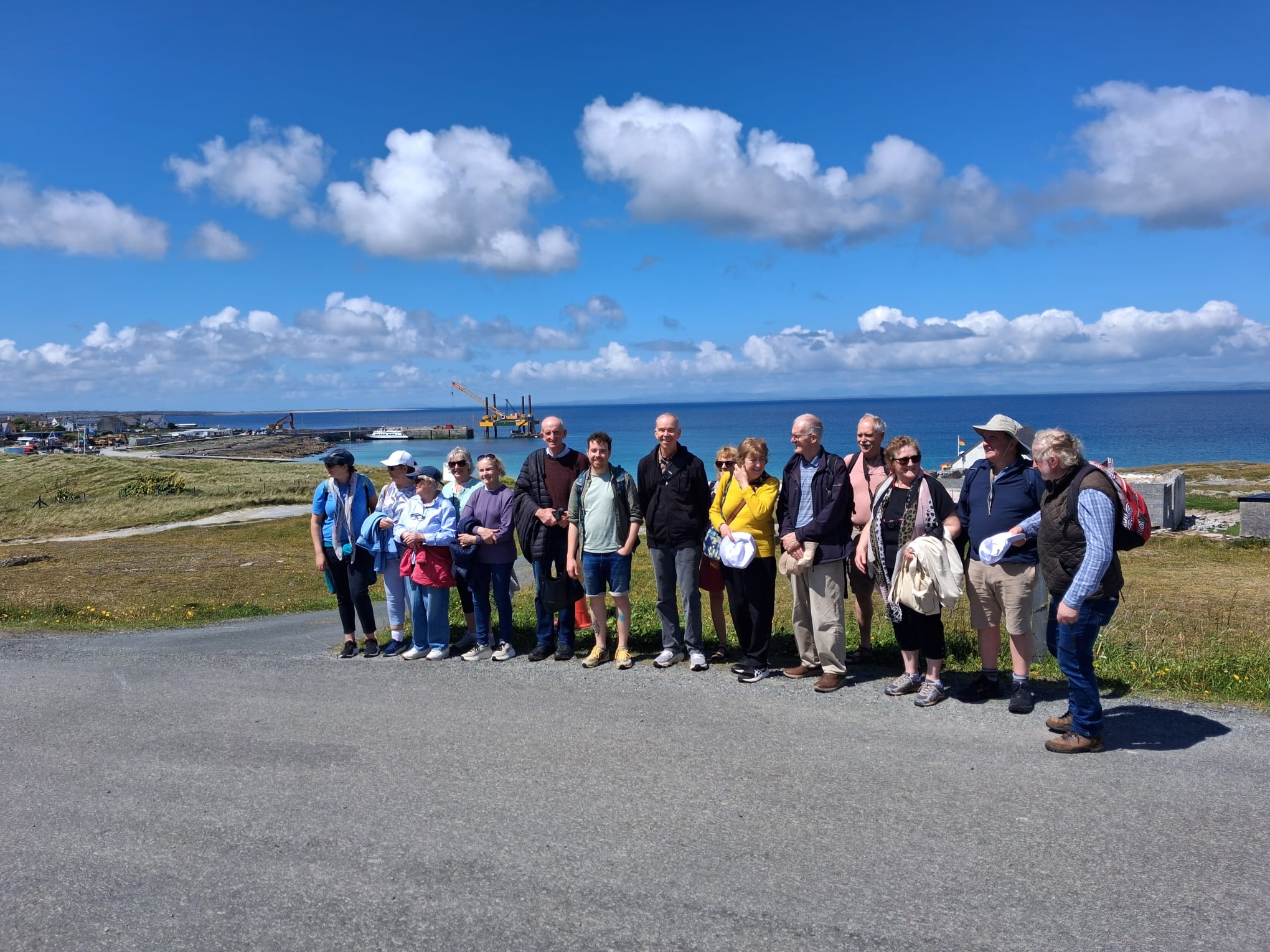
The sun shone brightly on Saturday as a group of Irish language enthusiasts from Gaeltacht an Eachréidh enjoyed a fabulous one day trip to the beautiful island of Inis Oirr.
After singing ‘Treasna na dTonnta’ on the ferry from Rossaveel, we met up at the island’s famed music pub, Tigh Ned, on the smallest of the three Aran Islands on Saturday morning. We met up with a few friends who had travelled from Doolin before starting our one day tour of the island.
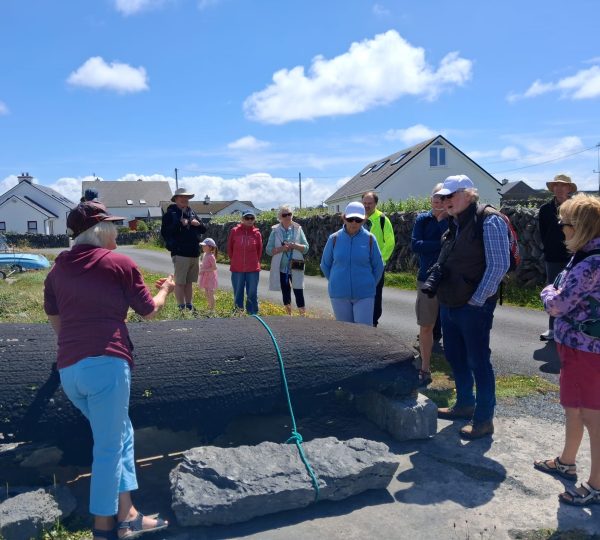
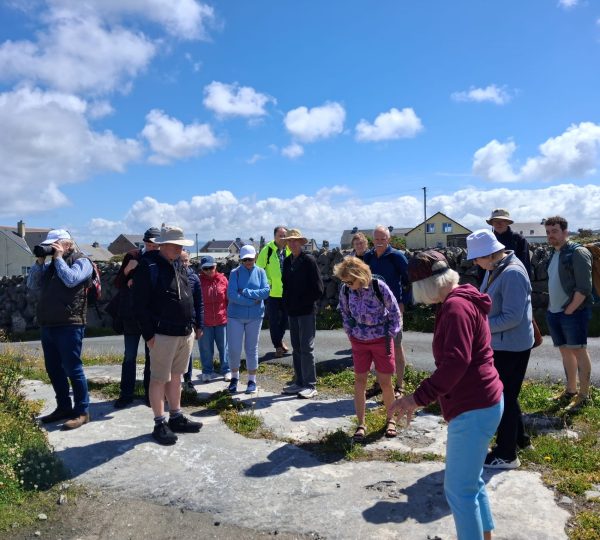
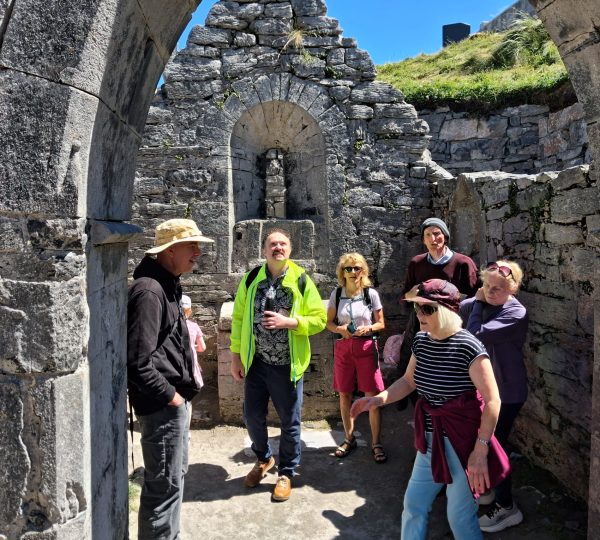
Local islander and historian Caithleen Ni Chonghaile took us on an informal two hour walking tour of the island in which she discussed its heritage, people, and how central the Irish language remains to the lives of the islanders.
We visited a disused currach, at a site just outside the village with spectacular views of Inis Meáin and Conamara, where Catithleen spoke about the importance of the traditional rowing craft to the economy and life of the island.
For example, the islanders used to row priests between the three Aran Islanders in all sorts of weather at a time when there were far fewer ferries.
She brought us to Cill Ghobnait, a tenth century church, which is located to the west of the island’s pier. Named after St. Gobnait, the defender of Ballyvourney (another Gaeltacht part of Ireland in County Cork. St Gobnait came to Inis Oirr from County Clare to flee from enemies, before moving to Ballyvourney, and Caithleen spoke of how friendships have been rekindled between the Cork and Inis Oirr Gaaeltachts in recent years.
St Gobnait is also the patron saint of bees and a currach in the island’s church honours her connection to the smallest of the Aran Islands.
Caithleen then brought us on a walking tour across the island, climbing the hill to O’Brien’s Castle, built in the early 15th century, which has panoramic views across the island, Galway Bay, Conamara, and Co. Clare.
She spoke of how the O’Brien clan fought with the O Flahtheartaighs of Conamara, who seized the castle in 1582. It was captured by Oliver Cromwell’s army in 1652, during the Cromwellian conquest of Ireland, and the building went into decline.
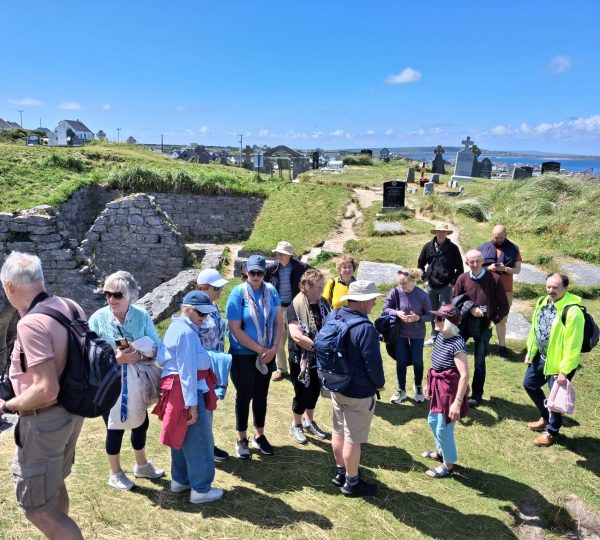
Our tour with Caithleen finished at Teampall Caomhán, otherwise known as St. Caomhán’s church, which dates from the 10th century.
Popularly known as the ‘Sunken Church’, the ruins are spectacular. The building was completely covered in sand until it was excavated by the islanders, who look after it until this day.
Caithleen told us that St. Caomhán was brother to St. Kevin of Glendalough, and is the patron saint of Inis Oírr whose feast day is June 14th. A Mass is held at the church on that date every year.
After leaving Caithleen at the cemetery, we met up with Davis Sandetefur, the Irish Language Officer for the island for the past two years.
Davis grew up in Kentucky and is a fluent Irish speaker. He told us about his love for the island, the importance of keeping Irish alive in communities such as Inis Oirr, and how he loves the winter months more than the busy tourist season.
He was delighted to take questions from the people from Carnmore, Claregalway, and Annaghdown who spent the day on the island – some of them had never been to Inis Oirr before but they will surely be back again!